AC vs DC outdoor air conditioner comparison for cabinet cooling - which system is right for your application

When you’re selecting an outdoor air conditioner for a telecom or industrial cabinet, one of the first decisions is the power type. These cabinets are engineered to endure external elements like high heat, yet the equipment they house—batteries, servers, and controls—demands stable internal temperatures. That makes a reliable air conditioner non-negotiable. But should you choose an AC or DC model for your specific needs?

1. Introduction: Selecting the Right Outdoor Air Conditioner

AC outdoor air conditioners are powered by alternating current, and DC outdoor air conditioners are powered by direct current. This divergence in current type directly shapes how they operate and what kind of electrical supply they need.

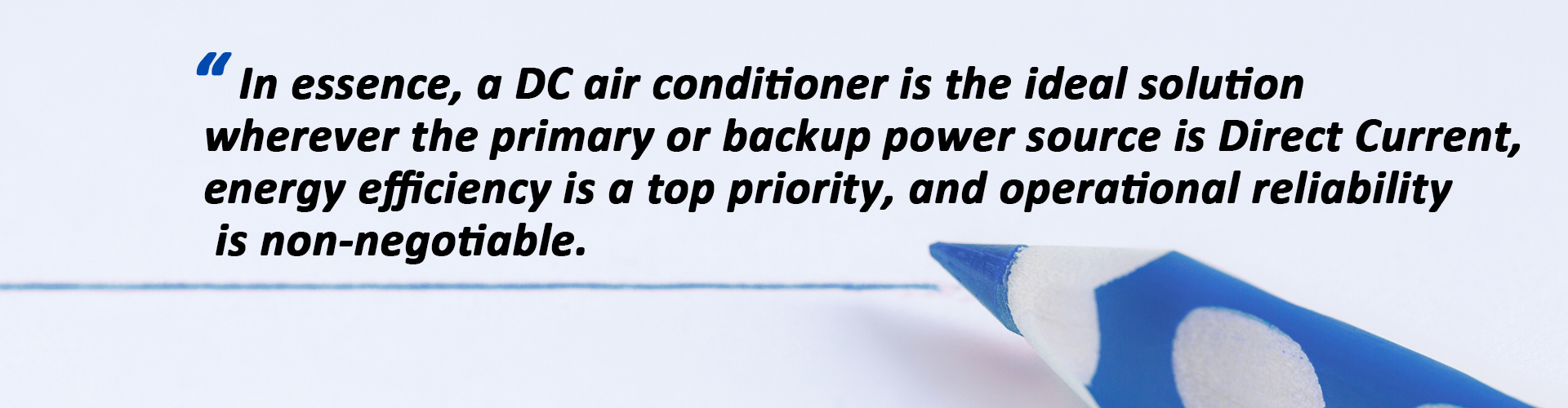
Selecting the appropriate outdoor air conditioning system—DC or AC—is a strategic decision that delivers both economic and operational advantages. The right choice ensures optimal performance for your specific application, from safeguarding sensitive machinery to integrating with solar power, leading to significant long-term energy savings and reduced operational costs.

2. AC-Powered Outdoor Air Conditioners for Cabinet Cooling

2.1 Overview 

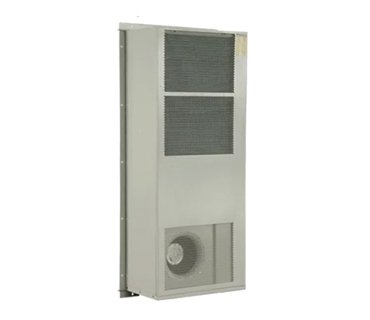
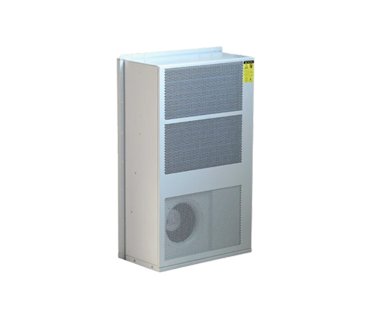
An AC-powered outdoor air conditioner is a robust and widely used cooling solution designed to manage the internal temperature of outdoor electrical enclosures. It operates on standard Alternating Current (AC), the same type of electricity supplied by the commercial power grid. These units function by actively extracting heat from inside the cabinet and releasing it to the external environment, ensuring that sensitive components like servers, telecommunications gear, and power supplies are maintained within a safe operating temperature range, even in harsh outdoor conditions.

2.2 Product Features

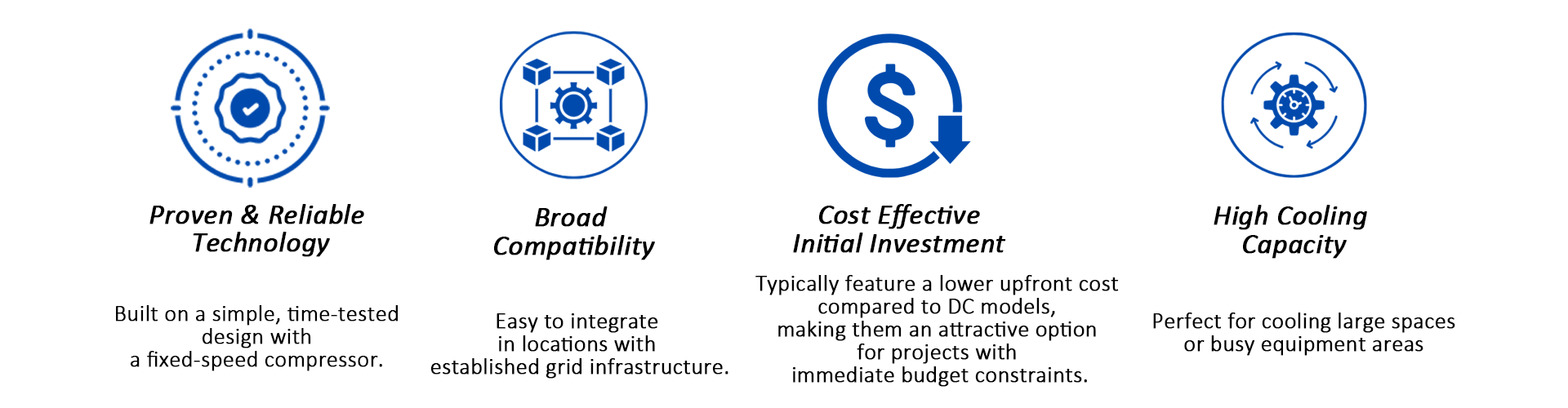
AC Conditioner Features

2.3 Application Scenarios of AC-Powered Outdoor Air Conditioner

AC air conditioners are the ideal choice for outdoor cabinets that have consistent and reliable access to the main electrical grid. Key application areas include:

  • Industrial Control Panels: Cooling cabinets housing PLCs, drives, and control systems on factory floors or in industrial complexes.
  • Network Infrastructure: Protecting telecommunications and networking equipment located in urban areas or within buildings with stable AC power.
  • Outdoor IT Enclosures: Sheltering edge computing devices or small servers in controlled environments.
  • Utility and Power Distribution Systems: Ensuring the optimal temperature for critical monitoring and switching equipment.

3. DC-Powered Outdoor Air Conditioners for Cabinet Cooling

3.1 Overview & Features

Imagine a cooling system that not only protects your equipment but also aligns perfectly with a sustainable energy strategy. That’s the promise of a DC-powered outdoor air conditioner.

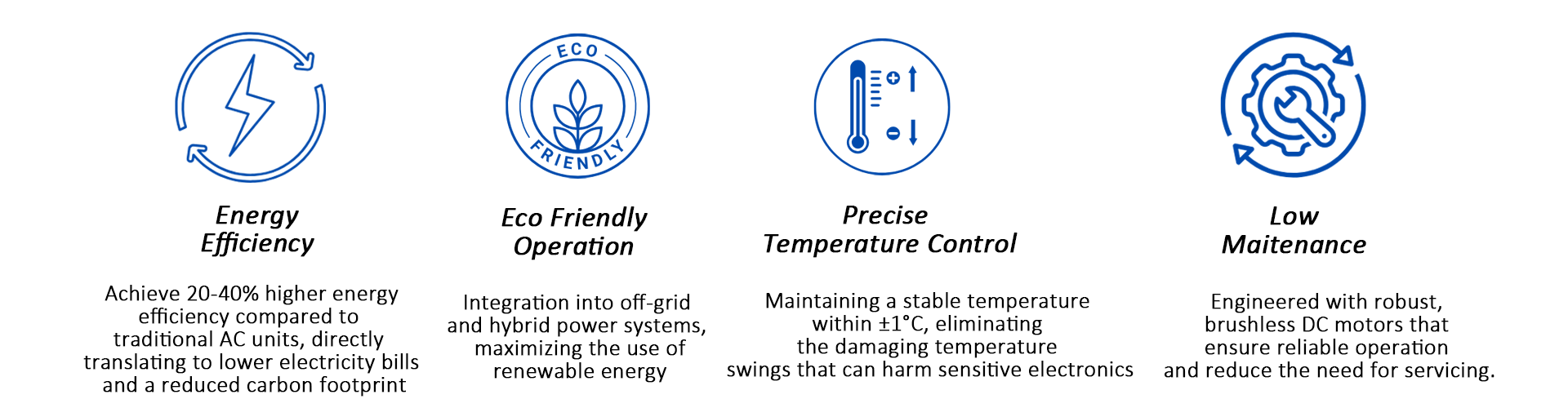
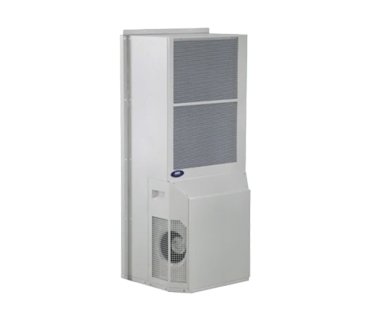
Unlike standard units, DC outdoor air conditioners run on direct current, the same language spoken by solar panels and batteries. This native compatibility makes them the undisputed champion for remote sites, off-grid installations, and any location where energy efficiency is paramount.

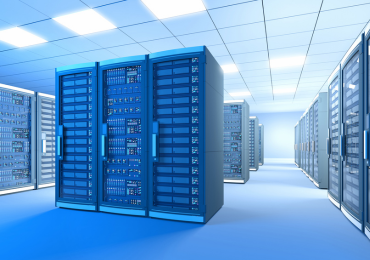
Their mission is critical: to provide precise and reliable cooling for temperature-sensitive equipment in data centers, telecom huts, and industrial cabinets. By maintaining a rock-steady temperature, they ensure your vital systems run without interruption, protecting your investment 24/7.

2.2 Product Features

DC Air Conditioner Features

Lorem ipsum dolor sit amet, consectetur adipiscing elit. Ut elit tellus, luctus nec ullamcorper mattis, pulvinar dapibus leo.

3.3 Application Scenarios of DC-Powered Outdoor Air Conditioner

DC outdoor air conditioners are not a one-size-fits-all solution, but they are the undisputed optimal choice for specific, often mission-critical, applications. Their unique ability to operate with high efficiency directly from DC power sources makes them indispensable in the following scenarios:

  • Telecommunications & Network Infrastructure

Scenario: 5G base stations, remote microwave transmission sites, and fiber optic hub cabinets.

Why DC? Telecommunication facilities inherently use a -48V DC power plant to ensure uninterrupted operation during grid outages. Using a DC air conditioner integrates seamlessly into this existing system, providing reliable cooling directly from the backup batteries without any power conversion loss, which is vital for network reliability.

  • Off-Grid & Renewable Energy Systems

Scenario: Solar-powered monitoring stations, remote weather stations, and off-grid security installations.

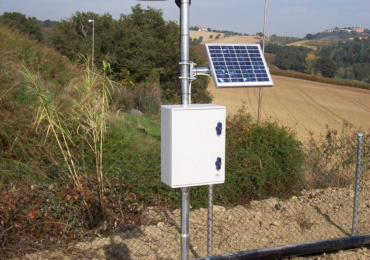
Why DC? These sites generate and store power as DC (from solar panels and batteries). A DC air conditioner operates directly from this source, eliminating the need for a costly and inefficient inverter. This maximizes the use of precious solar energy and extends battery backup time.

  • Transportation & Intelligent Transportation Systems (ITS)

Scenario: Roadside cabinets for traffic signal control, tunnel monitoring systems, and electronic toll collection systems.

Why DC? Many of these cabinets are equipped with battery backup. A DC outdoor air conditioner can be powered directly by this backup system, ensuring critical control equipment remains cool and operational during power failures, which is essential for public safety and traffic flow.

  • Industrial Automation & Remote Monitoring

Scenario: Enclosures for PLCs and control systems in oil and gas pipelines, mining operations, and water/wastewater treatment plants in remote locations.

Why DC? These harsh and often remote environments prioritize reliability and energy efficiency. DC outdoor air conditioners provide precise temperature control for sensitive electronics and can be effectively powered by on-site renewable sources or generators with DC output, reducing fuel consumption.


4. Comparison between AC Outdoor Air Conditioner and DC Outdoor Air Conditioner

5. Summary

  • Choose an AC Outdoor Air Conditioner if your primary concern is minimizing initial cost and you have access to a stable, reliable grid power source.

  • Choose a DC Outdoor Air Conditioner if your priority is maximizing long-term energy savings, reliability, and integration with DC power sources like batteries or solar panels.

how to choose air conditioner for outdoor cabinets
2500W AC Powered Air Conditioner, CE Certified
4000W DC Powered Air Conditioner, CE Certified
3000W DC Powered Air Conditioner, UL Certified
Axial Fan vs. Centrifugal Fan
What is a Data Center
How to Achieve Weatherproofing in Outdoor Cabinets
Scroll to Top