


Fiber Distribution Hubs
Ningbo Spring provides a complete range of flexible, scalable Fiber Distribution Hub (FDH) solutions designed for all types of outdoor placements. Our FDH solutions use standardized hardware and methods to ensure rapid deployment on pads, poles, or walls. This will simplify installation, reduces costs, and accelerates construction, offering you reliable and efficient fiber distribution for your network needs.

144 Fiber, Aluminum, Splitters/Adapters/Splice Trays/Pigtails Loaded, Pole/Wall Mount, IP55
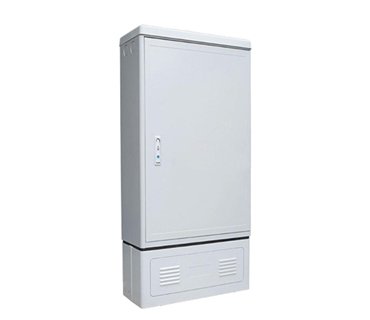
288 Fiber, SMC,Splitters/Adapters/Splice Trays/Pigtails Loaded, Pad Mount, IP55

384 Fiber, Stainless Steel, Splitters/Adapters/Splice Trays/Pigtails Loaded, Pad Mount, IP55
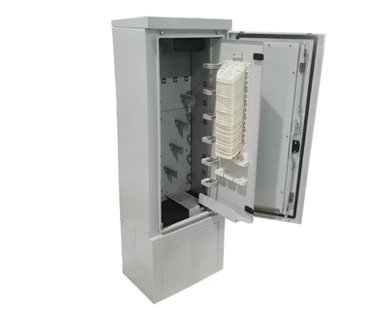
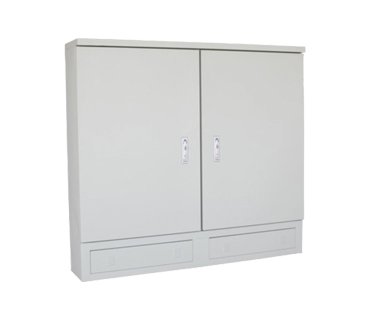
576 Fiber, Galvanized Steel, Optical Distribution Box (ODB) Included, Pad Mount, IP55
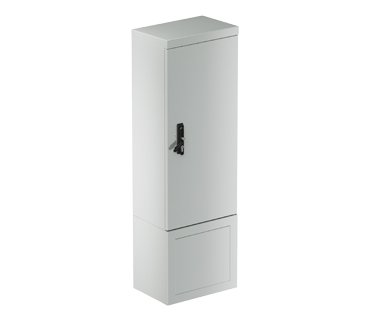
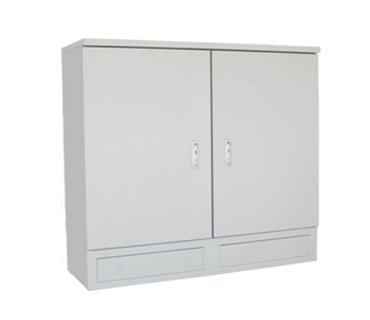
1152 Fiber, Galvanized Steel, Optical Distribution Box (ODB) Included, Pad Mount, IP55
As the demand for high-speed internet continues to grow, multiple service operators are seeking ways to increase bandwidth for their subscribers. To meet this challenge, engineers require cost-effective and efficient innovations. One such solution is deploying a Fiber Distribution Hub (FDH). An FDH allows for the seamless integration of 5G and other technologies, bringing much-needed access closer to the network edge.
What is Fiber Distribution Hubs?
A Fiber Distribution Hub (FDH) is a critical component in fiber optic network infrastructure, serving as the central point for distributing and managing fiber optic cables to multiple subscribers or end-users. The primary purpose of an FDH is to facilitate the connection between the main fiber backbone and the individual fiber optic lines that serve homes, businesses, and other premises. This efficient distribution hub ensures seamless connectivity, high-speed data transmission, and reliable network performance for a wide range of applications.
To be more specific, a Fiber Distribution Hub (FDH) is an outdoor enclosure designed to house and protect fiber optic components such as adapters, pigtails, and splitters and is used to connect optical fibers in the outside network.
We Offer Customization Services for Fiber Distribution Hubs.
Given the diverse application scenarios and varying telecommunications market requirements, we offer customized solutions for Fiber Distribution Hubs (FDH). Our technical team is dedicated to designing FDHs that meet your unique specifications based on the following parameters:
- Fiber Count: Tailored to the required number of fiber connections.
- Mounting Style: Options include pad, pole, or wall mounting to suit different installation environments.
- Input Type/Fiber Count/Cable Type and Length: Customized to handle specific input configurations.
- Output Cable Quantity, Fiber Count, and Length: Designed to match your output requirements.
- Connector Type: Compatible with your preferred connector types.
- Splitter Module Type: Adapted to your specific splitter needs.
With our customization services, we ensure that your Fiber Distribution Hub is perfectly suited to your network infrastructure and operational demands. Contact us to discuss your specific requirements and let us provide a tailored solution to optimize your fiber optic network.
A Fiber Distribution Hub (FDH) is a critical component in fiber optic network infrastructure, serving as the central point for distributing and managing fiber optic cables to multiple subscribers or end-users. The primary purpose of an FDH is to facilitate the connection between the main fiber backbone and the individual fiber optic lines that serve homes, businesses, and other premises. This efficient distribution hub ensures seamless connectivity, high-speed data transmission, and reliable network performance for a wide range of applications.
To be more specific, a Fiber Distribution Hub (FDH) is an outdoor enclosure designed to house and protect fiber optic components such as adapters, pigtails, and splitters and is used to connect optical fibers in the outside network.
End-to-end in-house manufacturing
We own and operate every stage of production — from sheet metal cutting, CNC bending, and welding through powder coating, painting, and final assembly. This vertical integration means we maintain complete quality control and can rapidly accommodate custom modifications without relying on third-party suppliers. Whether you require a modified internal layout, non-standard dimensions, or a custom color finish, our engineering and production teams can implement changes directly.
Fully integrated, ready-to-deploy solutions
We deliver FDH cabinets that arrive on site fully loaded, tested, and installation-ready. Rather than coordinating separate suppliers for enclosures, splitters, adapters, and accessories — and then paying field technicians to assemble everything on location — customers receive a single, fully integrated product from a single source. This approach reduces field labor requirements, minimizes compatibility issues, and accelerates deployment timelines.
Flexible production for projects of all scales
Our production setup is designed to handle both small-batch custom orders and large-volume rollouts with equal efficiency. We support pilot projects with quantities as low as a few units, as well as full-scale deployments requiring hundreds of cabinets. This flexibility, combined with our in-house engineering capability, means we can adapt quickly to evolving project requirements — a benefit that is particularly valuable during network expansion and upgrade cycles.