
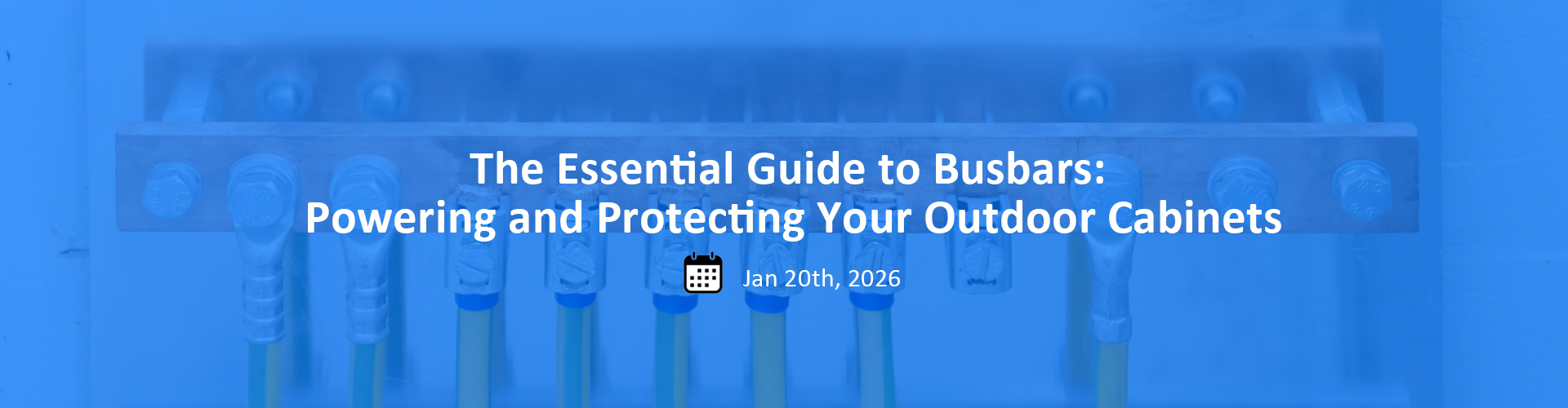
Illustrated banner for "The Essential Guide to Busbars: Powering and Protecting Your Outdoor Cabinets" featuring electrical cabinet with copper busbar installation.

1. What is a Busbar?

A Busbar is a solid strip of highly conductive metal—typically copper or aluminum—featuring a series of drilled holes or terminals. It acts as a common connection point for multiple electrical circuits.

  • Analogy: Think of it as a central “spine” or “hub” for electrical flow, as opposed to a tangled web of individual wires (daisy-chaining).
  • Primary Functions:
    • Grounding / Earthing: Provides a single, robust point to connect all safety grounds from equipment, shielding, and the cabinet structure.
    • Power Distribution: Distributes power from a main input to multiple devices in parallel, ensuring clean and stable voltage.

2. The Critical Role of Busbars in Outdoor Cabinets

In harsh outdoor environments, a quality busbar isn’t an accessory—it’s a necessity.

  • Safety First (Lightning & Fault Protection): It creates a predictable, low-impedance path to earth for lightning strikes and fault currents. This safely diverts destructive energy away from sensitive electronics, preventing fire hazards and equipment damage.
  • Reliability in Adversity: It eliminates loose wire connections prone to failure from vibration, thermal cycling, and corrosion—common challenges outdoors.
  • Signal Integrity: By establishing a clean, common ground reference point, it minimizes electromagnetic interference (EMI) and ensures stable operation of communication and control systems.
  • Organizational Efficiency: It enables a neat, modular, and maintainable cabinet layout, simplifying installation and future upgrades.

3. How to Choose the Right Busbar for Your Outdoor Cabinet? (Material, Coating, Specs)

Selecting the optimal busbar is a foundational engineering decision that directly impacts the safety, efficiency, and long-term reliability of your outdoor enclosure. This section provides a clear framework for evaluating the three critical pillars of busbar selection: Base Material, Surface Coating, and Physical Sizing.

3.1 Material: The Core of Conductivity and Reliability

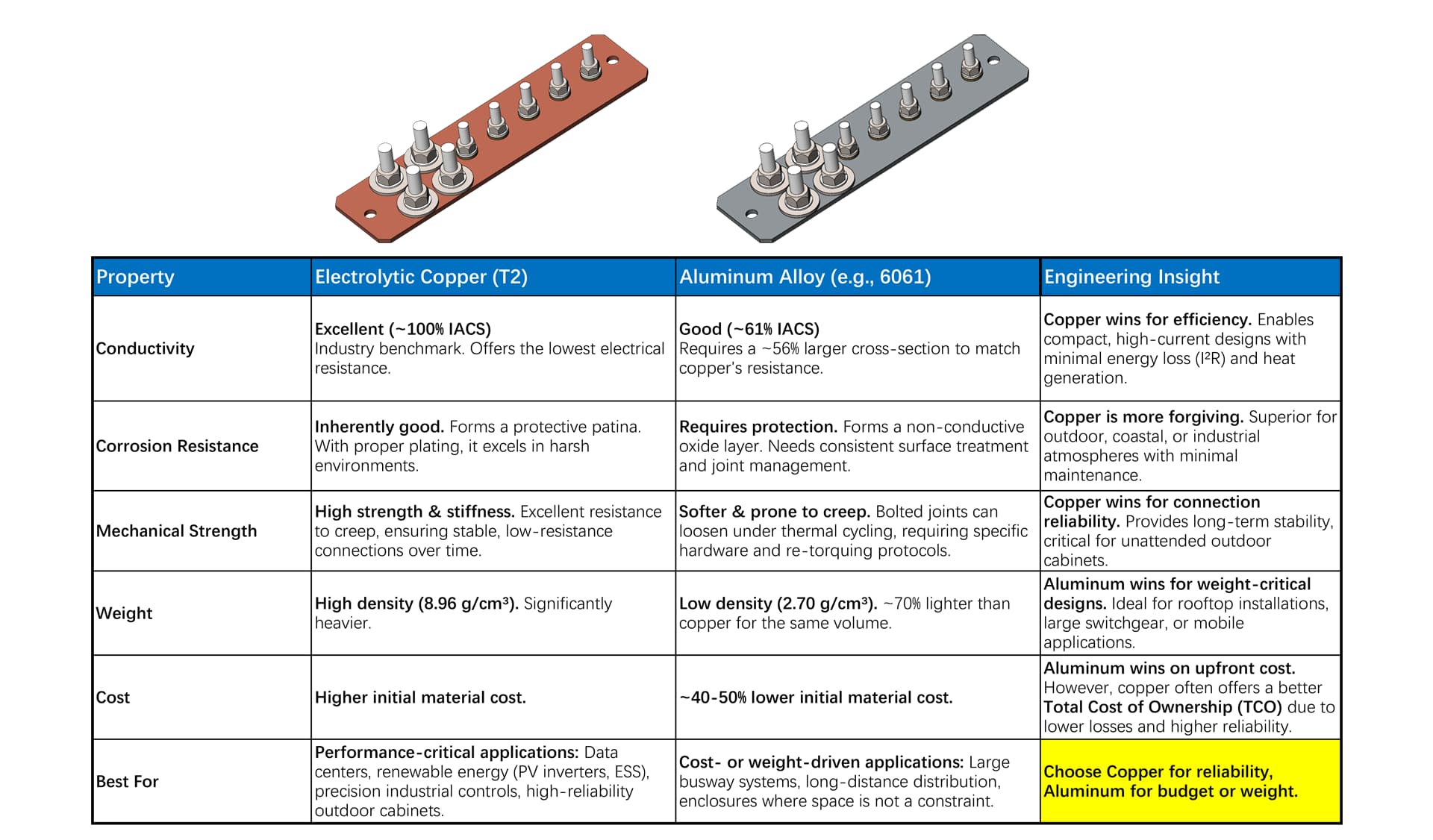
The base material defines the fundamental current-carrying capacity, mechanical behavior, and environmental resilience. The two primary contenders are Electrolytic Copper (T2) and Aluminum Alloy, each serving different design priorities.

3.2 Coating: The Shield Against the Elements

A bare conductor, especially in an outdoor setting, will degrade. The right coating is not optional—it is essential for maintaining a low-resistance contact surface and preventing failure.

Why Coating is Critical: It prevents oxidation/corrosion, ensures stable contact resistance, aids in solderability, and provides a barrier against environmental contaminants.

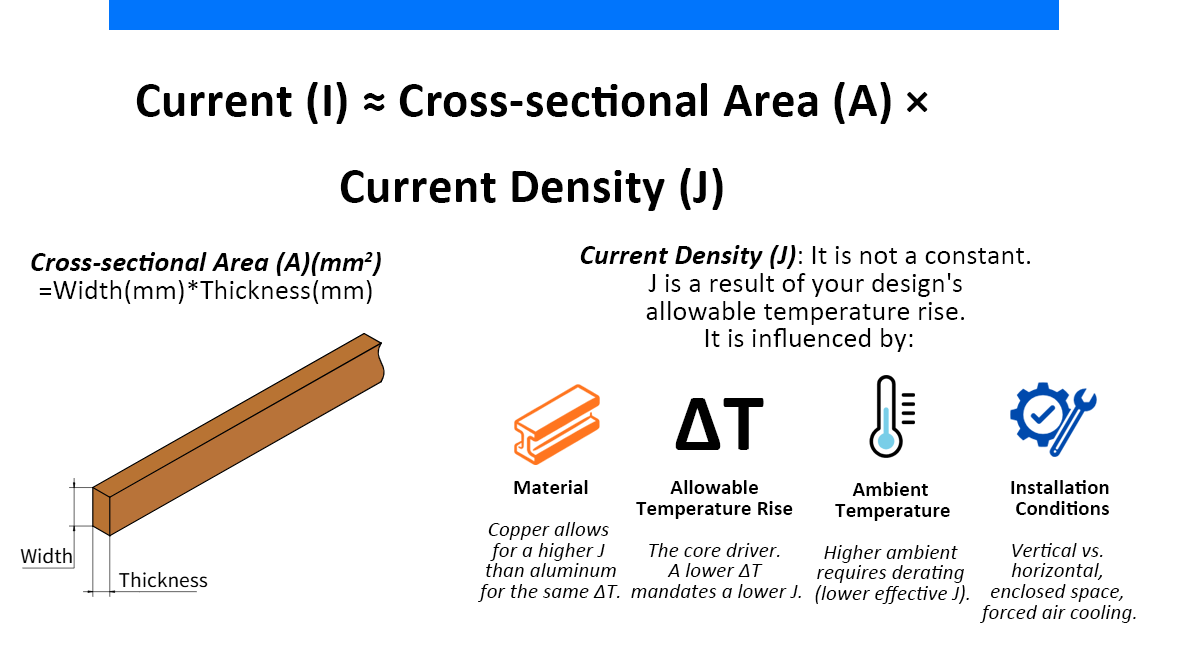
3.3 Busbar Size Calculation: Balancing Current and Temperature

The core principle for sizing is derived from the relationship between current, area, and current density:

Standard Busbar Size & Current Reference (Guide)
*Based on Tin-Plated Copper, 40°C Ambient, ΔT≈55°C, Natural Cooling, Horizontal Mounting.*

Reference Current at 40°C Ambient

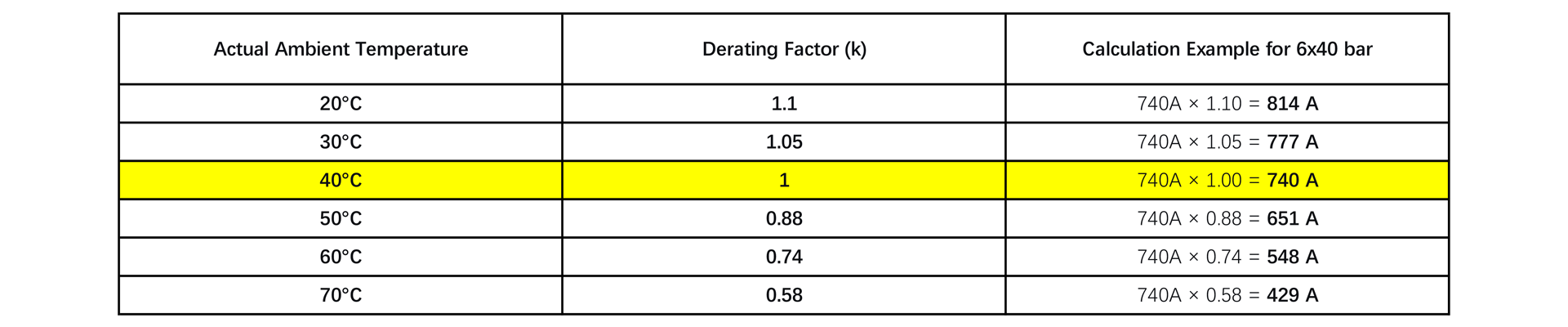
Ambient Temperature Derating Factors, k

Table 2

Adjusted Current = Reference Current (from Table 1) × Derating Factor (k from Table 2)

4. Installation of Busbars in Outdoor Cabinets: Best Practices

Proper installation ensures the busbar performs as designed.

  1. Location: Mount on a sturdy, non-painted area of the cabinet’s backplane or dedicated rails, ensuring easy access for wiring.
  2. Surface Preparation: Clean the mounting surface and busbar contact area to ensure metal-to-metal contact.
  3. Secure Mounting: Use the provided hardware. Tighten bolts to the specified torque to ensure optimal contact pressure without damaging the bar.
  4. Connection Order: For grounding bars, connect the main earth cable first, then branch grounds. Use proper crimped lugs or terminals on all wires.
  5. Protection: Consider using insulating covers (especially for power distribution bars) to prevent accidental contact.
  6. Labeling: Clearly label the busbar and its connection points for safe maintenance.
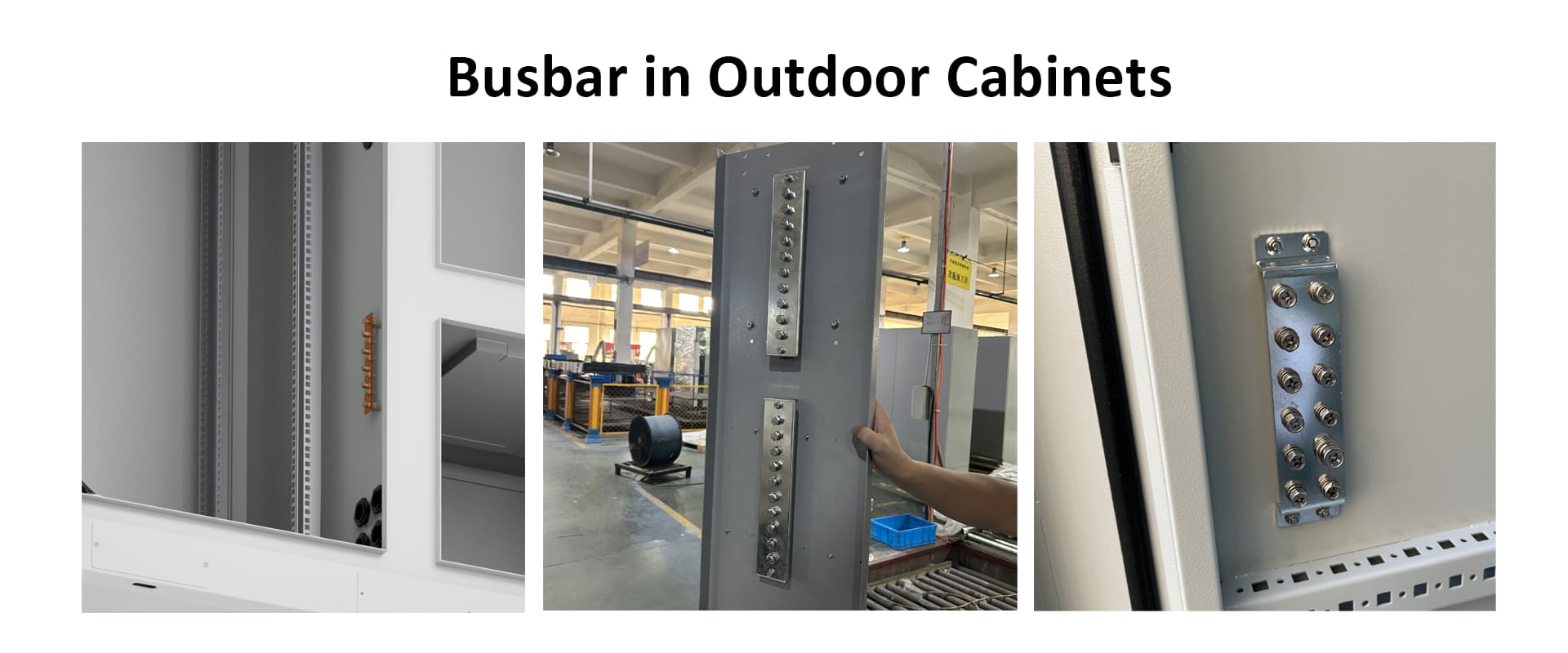
Photograph of copper busbars installed inside a grey outdoor electrical cabinet, showing their rigid mounting and connections.

A well-chosen and properly installed busbar is the unsung hero of any outdoor cabinet. It is the foundation of electrical safety, the guardian of system reliability, and the organizer of efficient maintenance.

Don’t let the weakest link compromise your outdoor infrastructure. By understanding these principles, you can specify the right component for your project.

Three distinct styles of customizable copper busbars: a straight bar, a multi-branch configuration, and a complex bent shape, demonstrating flexible manufacturing.

FAQs about Busbar

A: Copper offers higher conductivity and better corrosion resistance, making it ideal for demanding, high-current applications. Aluminum is lighter and more cost-effective, but requires a larger cross-section for the same current capacity and needs special attention to contact surfaces to prevent galvanic corrosion.
A: Tin-plating provides a protective layer that prevents the copper base from oxidizing. Oxidation increases contact resistance, which can lead to overheating, energy loss, and eventual connection failure. It ensures a stable, low-resistance connection over the cabinet's lifespan.
A: The size depends on the maximum current load and the ambient temperature. You must determine your total current requirement, then use a standard busbar current-carrying capacity table (like Table 1 in our guide) as a starting point, and apply a temperature derating factor (like Table 2) to find the correct size for your specific environment.
A: For safety and performance, the busbar must be mounted on a sturdy, conductive surface (like the bare metal backplane) to ensure a proper grounding path. Avoid mounting on painted or anodized surfaces, as this can create a poor ground connection.
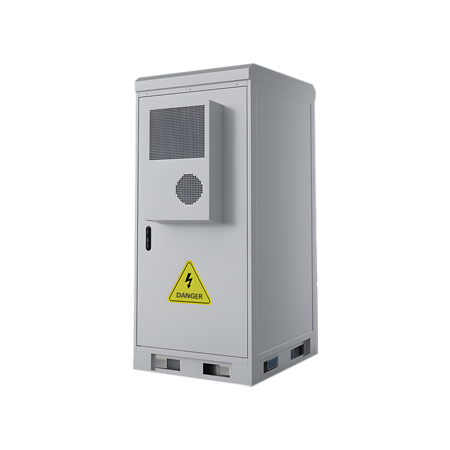
Multi-functional Outdoor Cabinet
44U Outdoor Cabinet
38U Outdoor Enclosure
The "19-Inch" Rack
DC vs. AC Outdoor Air Conditioner for Cabinet Cooling
Axial Fan vs. Centrifugal Fan
Scroll to Top