

cord grips in Telecom Cabinets: Materials, Threads and Their Impact on Protection and Durability
Cord grips play an important role in keeping telecom cabinets properly sealed and protected. In outdoor environments, factors such as material, thread type and sealing design can directly affect waterproof performance and long-term reliability. This article takes a closer look at how cable gland nuts work in real applications, and what to consider when selecting them for telecom cabinets. It also highlights common issues that can lead to sealing failure, helping improve overall equipment protection and reduce maintenance risks.
Table of Contents
ToggleTelecommunication cabinets are designed to protect sensitive equipment from harsh outdoor environments. In real deployments, these cabinets are constantly exposed to rain, dust, humidity, vibration and temperature fluctuations. Over time, even small weaknesses in sealing can allow moisture or dust to enter the enclosure and affect the reliability of communication equipment.
While the cabinet structure itself is important, small components such as Cord Grips play a critical role in maintaining the cabinet’s sealing performance and long-term reliability.
Understanding how gland nut materials, threads and sealing structures influence performance can therefore help engineers and procurement teams make better decisions when designing or specifying telecom cabinets.
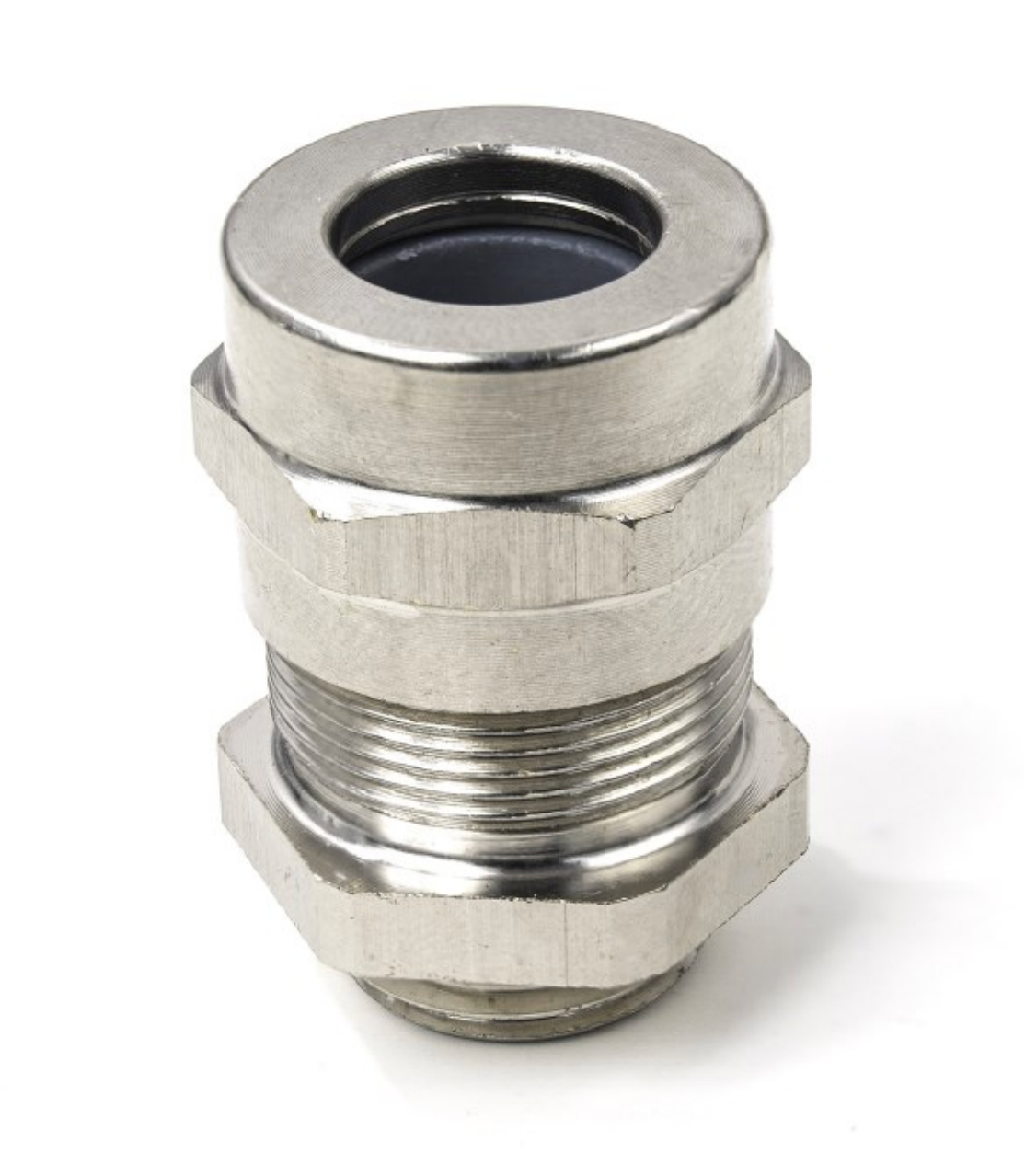
What Is a Cord Grips?
Cord Grips is a fastening component used together with a cable gland to secure cables entering a cabinet or enclosure. Although it is relatively small compared with the overall cabinet structure, it plays several important roles in the cable entry system.
- Fix the Cord Grips to the cabinet wall
- Maintain the sealing structure that protects against water and dust
- Provide mechanical strength to withstand vibration and cable tension
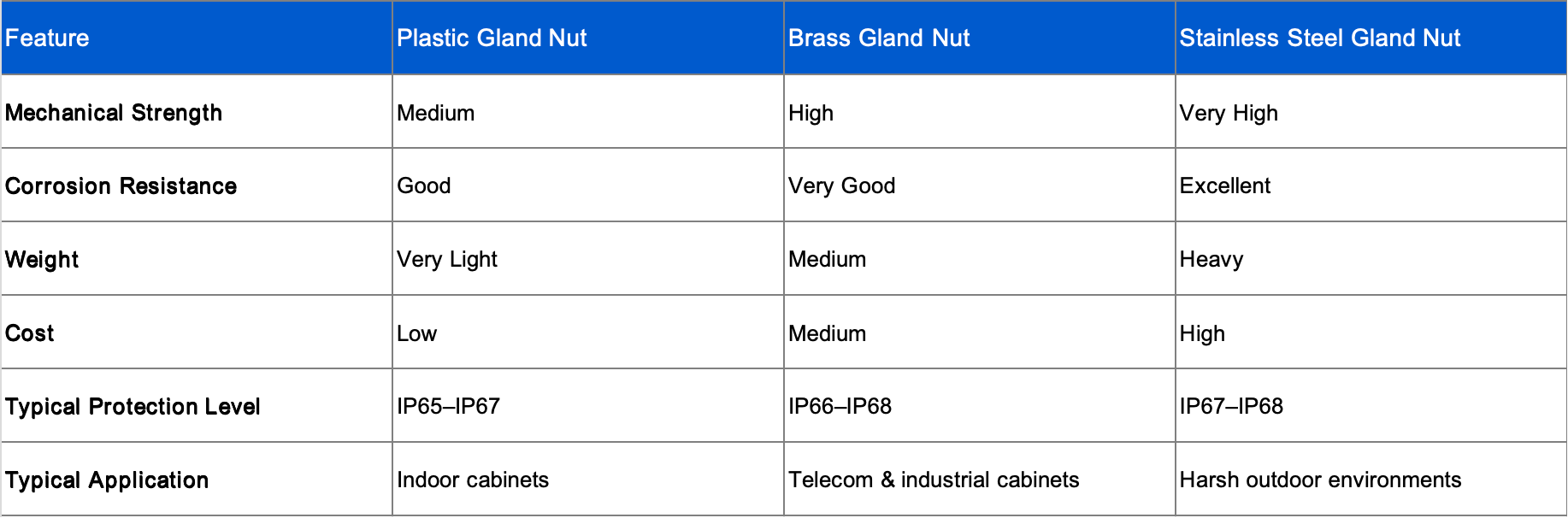
When properly installed, a gland assembly can help telecom cabinets maintain protection levels such as IP65, IP66 or even higher. This level of protection is essential for outdoor communication infrastructure where equipment must operate continuously for many years.
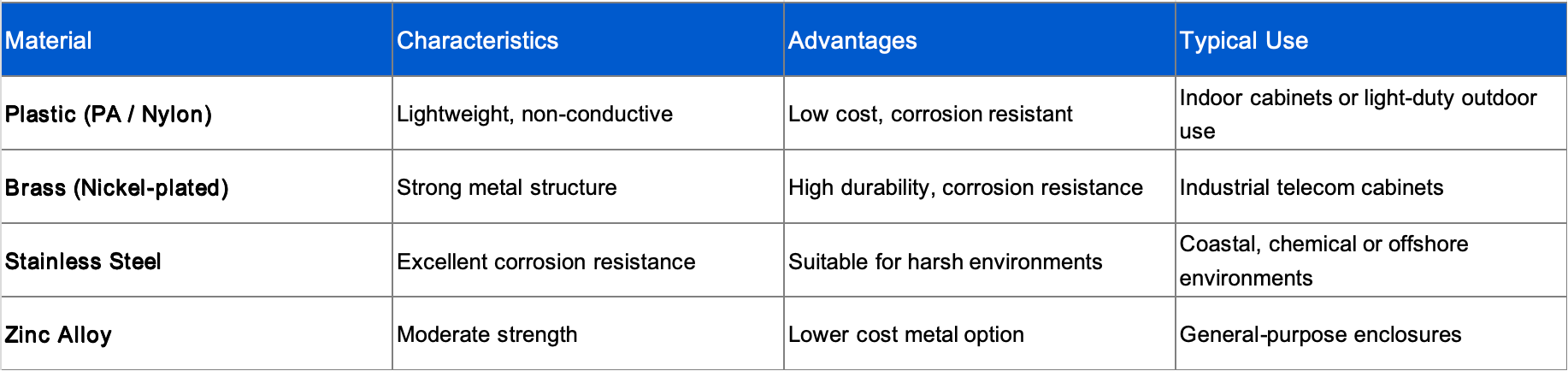
Common Materials Used for Cord Grips
The material used for a Cord Grips has a direct impact on mechanical strength, corrosion resistance, cost and environmental durability. Different materials are therefore selected depending on the cabinet environment and application requirements.
Thread Types and Their Influence on Installation
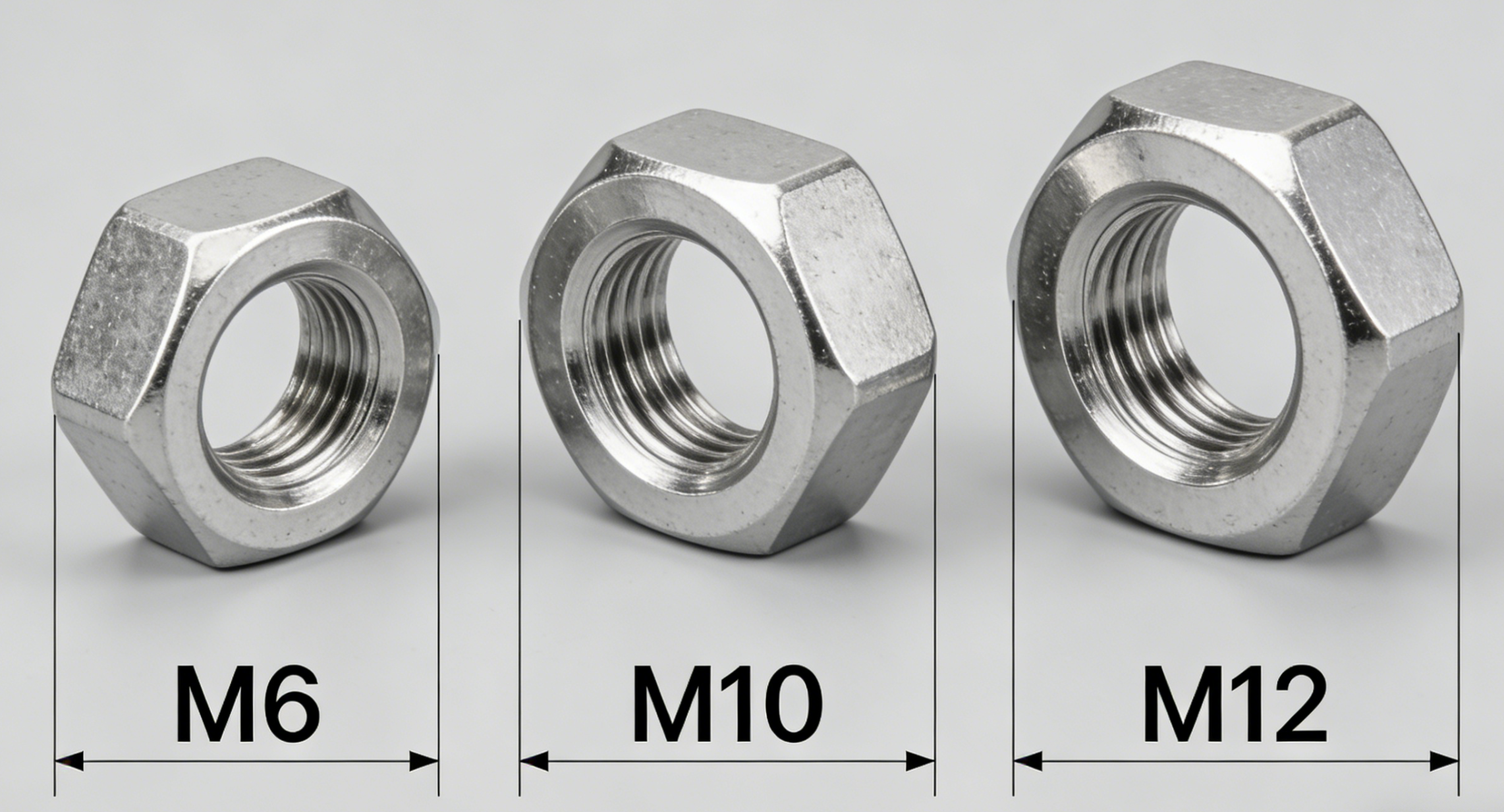
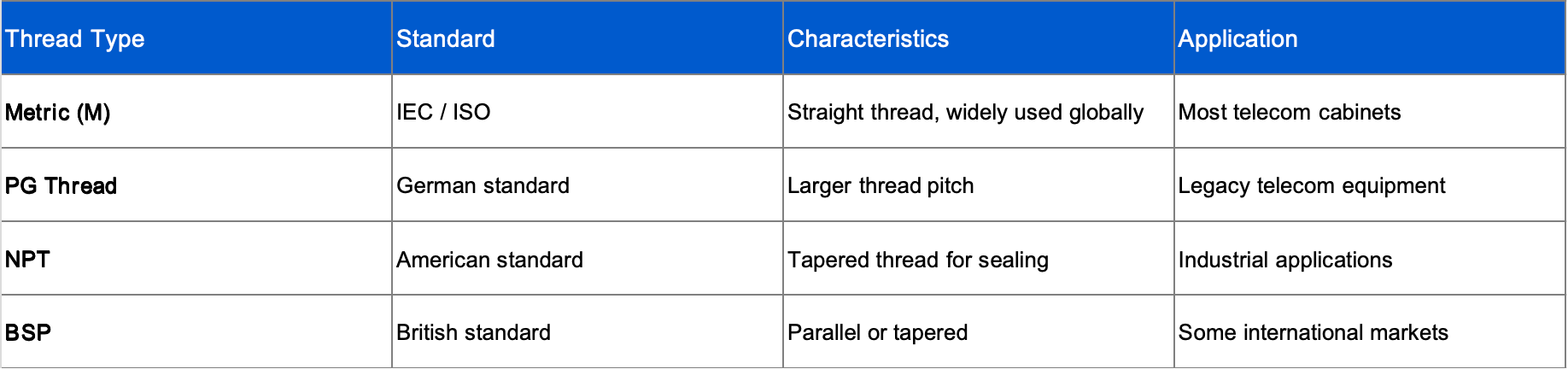
Thread design is another important factor that affects installation efficiency and sealing reliability. The thread must match the cabinet panel opening precisely so that the Cord Grips can be mounted securely without damaging the enclosure.
In large-scale cabinet production, metric threads are typically preferred because they simplify manufacturing and ensure compatibility with standard cable glands.
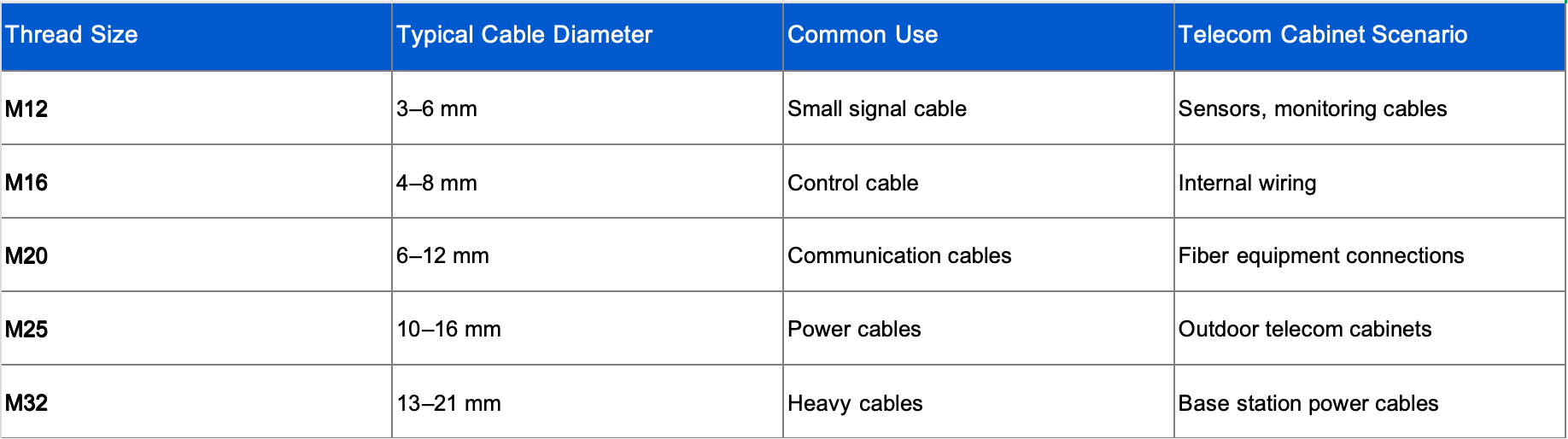
Thread size is also closely related to the cable diameter being installed. Smaller sizes such as M12 and M16 are commonly used for signal or control cables. Medium sizes like M20 are often used for communication cables and fiber equipment connections. Larger sizes such as M25 and M32 are typically selected for power cables or base station installations where cable diameters are significantly larger.
Thread Types and Their Influence on Installation
The environmental protection of a telecom cabinet does not depend on a single component. Instead, it relies on a sealing system in which several parts work together to prevent water and dust from entering the enclosure.
A typical Cord Grips assembly includes a sealing ring or elastomer gasket, a compression insert, an O-ring between the gland body and the cabinet wall, and the Cord Grips itself. Each of these components contributes to the overall sealing structure.
When installed correctly, the Cord Grips applies compression to the internal sealing components. This compression forces the sealing ring to deform slightly around the cable jacket, filling small gaps between the cable surface and the gland body. At the same time, the O-ring between the gland body and the cabinet panel is compressed to form a seal at the cabinet wall.
As a result, the system creates two critical sealing interfaces. The first prevents water from traveling along the cable into the enclosure. The second prevents moisture from entering through the panel opening around the Cord Grips itself. Both sealing points must function properly in order to maintain the cabinet’s environmental protection rating.
In outdoor telecom cabinets, common protection targets include IP65, IP66 and IP67. These ratings indicate resistance to dust, water jets or temporary immersion. However, achieving these ratings in practice depends heavily on the quality of the gland assembly and the precision of its installation.
The Cord Grips plays an important role in generating the correct compression force. If the nut is not tightened sufficiently, the sealing elements may not fully engage with the cable surface, allowing water or dust to penetrate the enclosure over time. On the other hand, excessive tightening can also create problems. Too much compression may deform sealing inserts, damage cable jackets or accelerate the aging of elastomer materials.
Environmental conditions can further challenge the long-term performance of Cord Grips seals. Outdoor cabinets experience continuous temperature changes, which cause materials to expand and contract. Ultraviolet exposure can gradually degrade elastomer seals. In addition, wind, vibration or cable movement may slowly reduce sealing pressure at the cable entry point.
For these reasons, many telecom cabinet manufacturers prefer sealing materials such as EPDM or silicone, which provide better resistance to temperature variations and environmental aging.
Another important consideration is long-term reliability. Telecom cabinets are often expected to operate for ten to twenty years with minimal maintenance. Maintaining effective sealing for such a long period requires stable Cord Grips materials, high-quality elastomer components and precise thread engagement.
In fact, many cases of water ingress reported in telecom cabinets are not caused by structural enclosure failures. Instead, they are often the result of gradual loss of compression in Cord Grips assemblies. Therefore, selecting an appropriate gland nut design is not only a matter of installation convenience, but also a critical factor in ensuring the long-term environmental protection of telecom infrastructure.
Related Products