

Telecom & Power Infrastructure Crime Is Escalating — And Cabinets Are Now Primary Targets
Nowadays, crimes targeting outdoor metal infrastructures have become a usual public issues. Recent reporting from the U.S., Africa, and Europe shows a consistent pattern: Attacks on critical infrastructure are increasing in frequency, coordination, and economic impact.
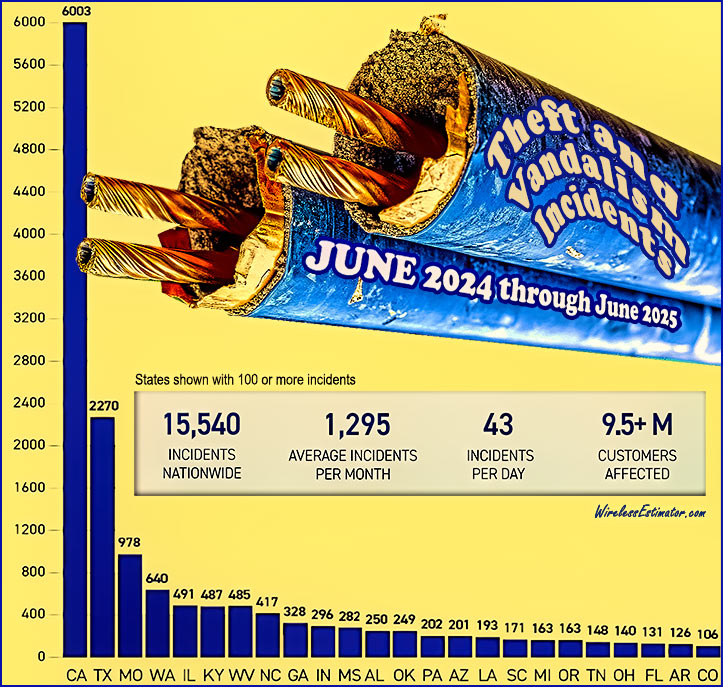
Industry analysis indicates that during 2024–2025, infrastructure theft and vandalism incidents in the United States have exceeded 800 attacks per month, affecting Telecom and power networks nationwide.
These incidents disrupt broadband connectivity, emergency communications, and utility services. And it is widely found worldwide.
In Tanzania, Africa,national authorities have reported thousands of vandalism cases involving electrical and telecom infrastructure in recent years.Organized groups are targeting installations for recoverable metals and resale value.
The pattern is clear:Infrastructure crime is economically driven, increasingly organized, and escalating.
What Are Criminals Targeting?
In previous cases, Telecom crime targets were usually easy-to-obtain power facilities like high-voltage Telecom cables with abundant high-purity copper. Yet as metal prices have surged in recent years, cabinets have emerged as another target in documented instances.
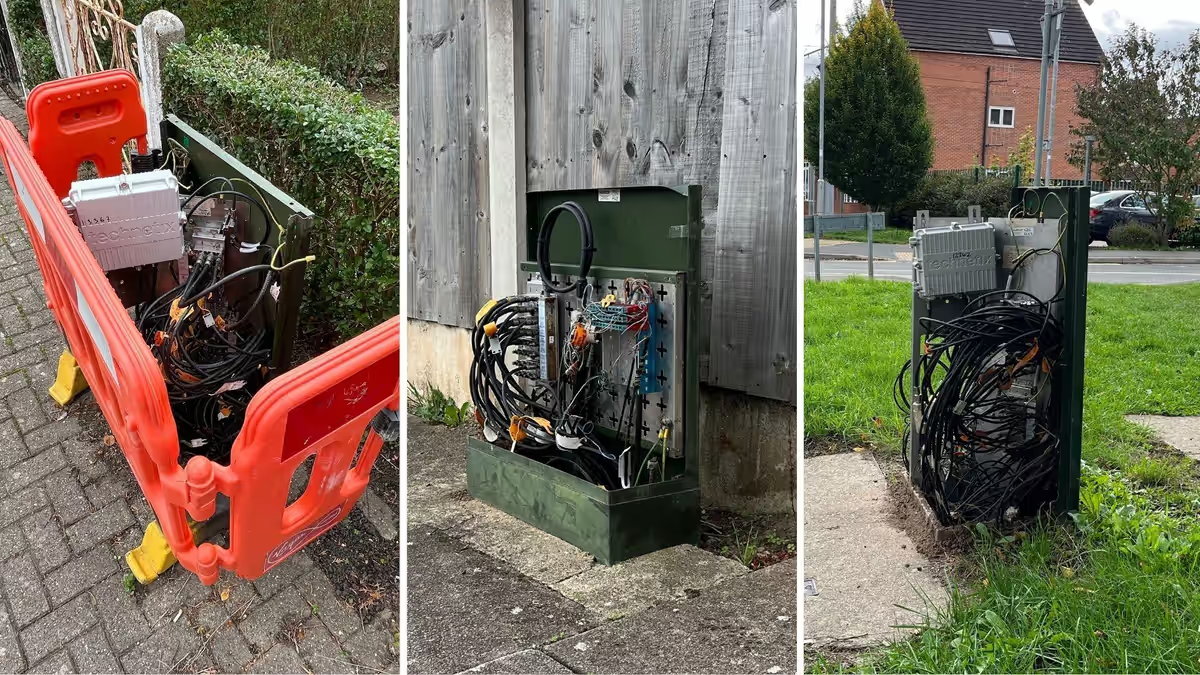
Recent UK cases involving broadband street cabinets demonstrate that attackers are now targeting:
- Cabinet metal shells and outer covers
• Internal metallic structural components
• Ground bars and conductive assemblies
• Backup power systems
• Copper conductors inside enclosures
For thieves, the metal enclosures of these cabinets are highly valuable and worth stealing, perfectly fitting their core demands of low theft difficulty, simple monetization and quick profits.
Mainly made of hot-dip galvanized steel sheets with a small number of high-end models using 304 stainless steel, the cabinet enclosures boast considerable scrap value, and stealing matching internal copper accessories further amplifies the profit space and theft motivation. Compared with high-voltage cables, outdoor cabinet enclosures have distinct theft advantages: no electric shock or high-altitude operation risks, ground disassembly with basic tools requiring no professional skills, most ordinary cabinets lacking anti-disassembly alarms, and disassembly not causing immediate communication interruption thus leading to a much lower detection rate. A small theft gang can easily disassemble multiple cabinets in one night for substantial profits, and the cash-based scrap recycling market enables fast, barrier-free monetization, making these cabinets a new favorite of telecom infrastructure theft in the rising metal price cycle
The True Cost of a Cabinet Attack
The financial and operational fallout from a telecom cabinet theft or breach far outweighs the marginal investment in anti-theft cabinet design. Beyond the direct loss of the cabinet itself and internal components, the total exposure for operators includes
Full equipment replacement
• Emergency repair mobilization
• Network downtime penalties
• SLA non-compliance risk
• Public safety exposure
• Brand and regulatory impact
For telecom operators, utilities and infrastructure investors alike, investing in anti-theft cabinets is not an additional cost, but a strategic safeguard. The upfront expense of anti-theft design is negligible when measured against the exorbitant costs of post-breach recovery, making prevention the most cost-effective and prudent choice for long-term operational stability.
So for specific regions and customer pain points, the use of telecom cabinets with anti-theft designs is far more effective.
Why Traditional Protection Is Not Enough
Current anti-theft solutions for telecom cabinets on the market primarily rely on monitoring, geo-tracking and alarm systems. Though such designs serve as an effective deterrent to criminal acts, they offer little protection against physical tampering and metal theft that targets the cabinet enclosures directly. Alarms and monitoring systems provide notification but they do not physically stop prying, cutting, grinding, or blunt-force attacks.
The upfront expense of anti-theft design is negligible when measured against the exorbitant costs of post-breach recovery, making prevention the most cost-effective and prudent choice for long-term operational stability.Structural resistance increases attack time, effort, and noise whhich fundamentally altering the attacker’s cost-benefit calculation.
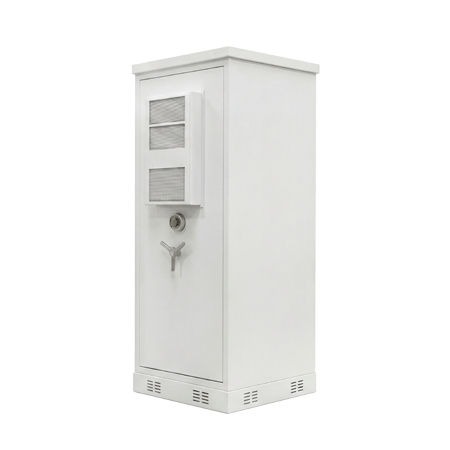
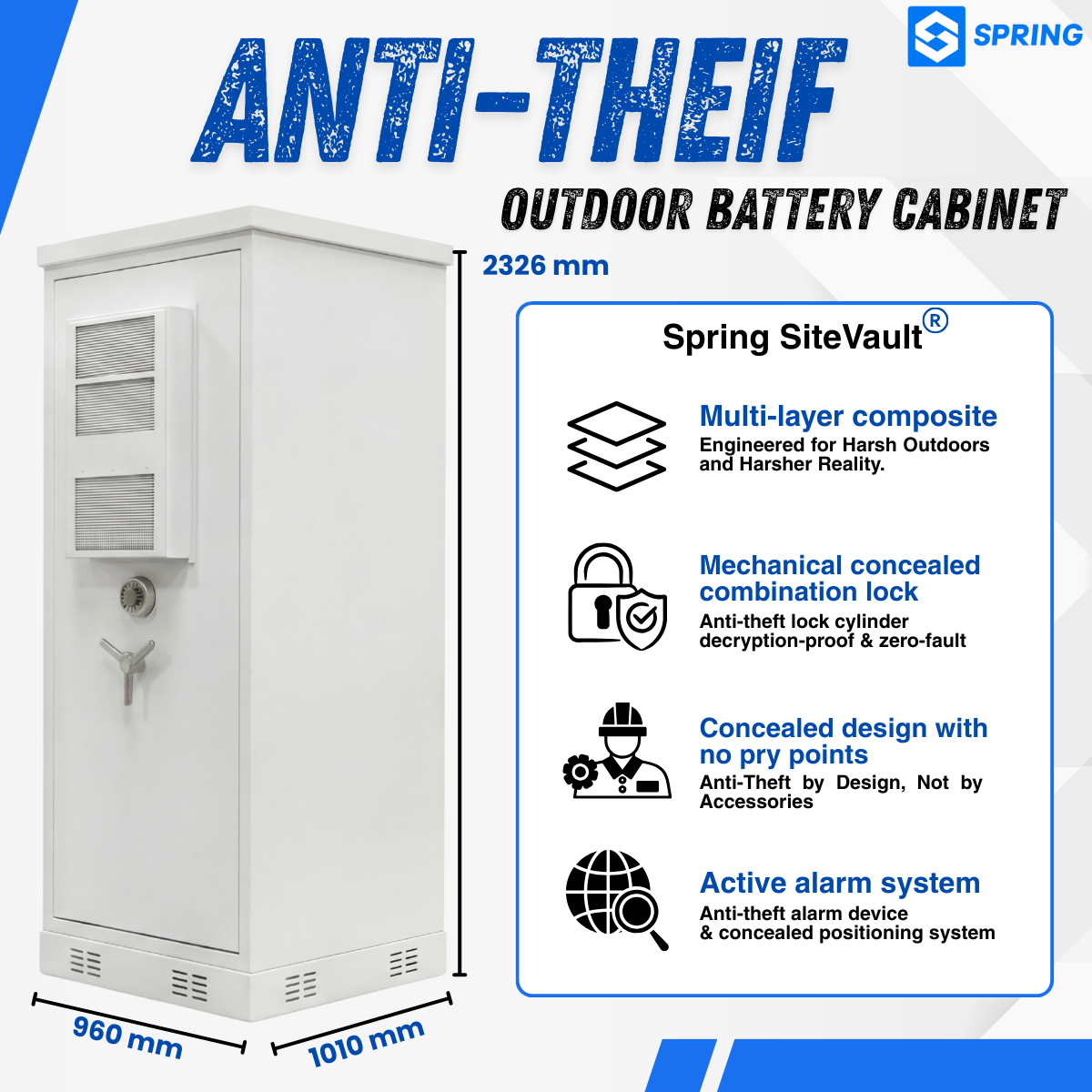
Our Anti-Theft Outdoor Communication Cabinet is engineered around a simple principle:
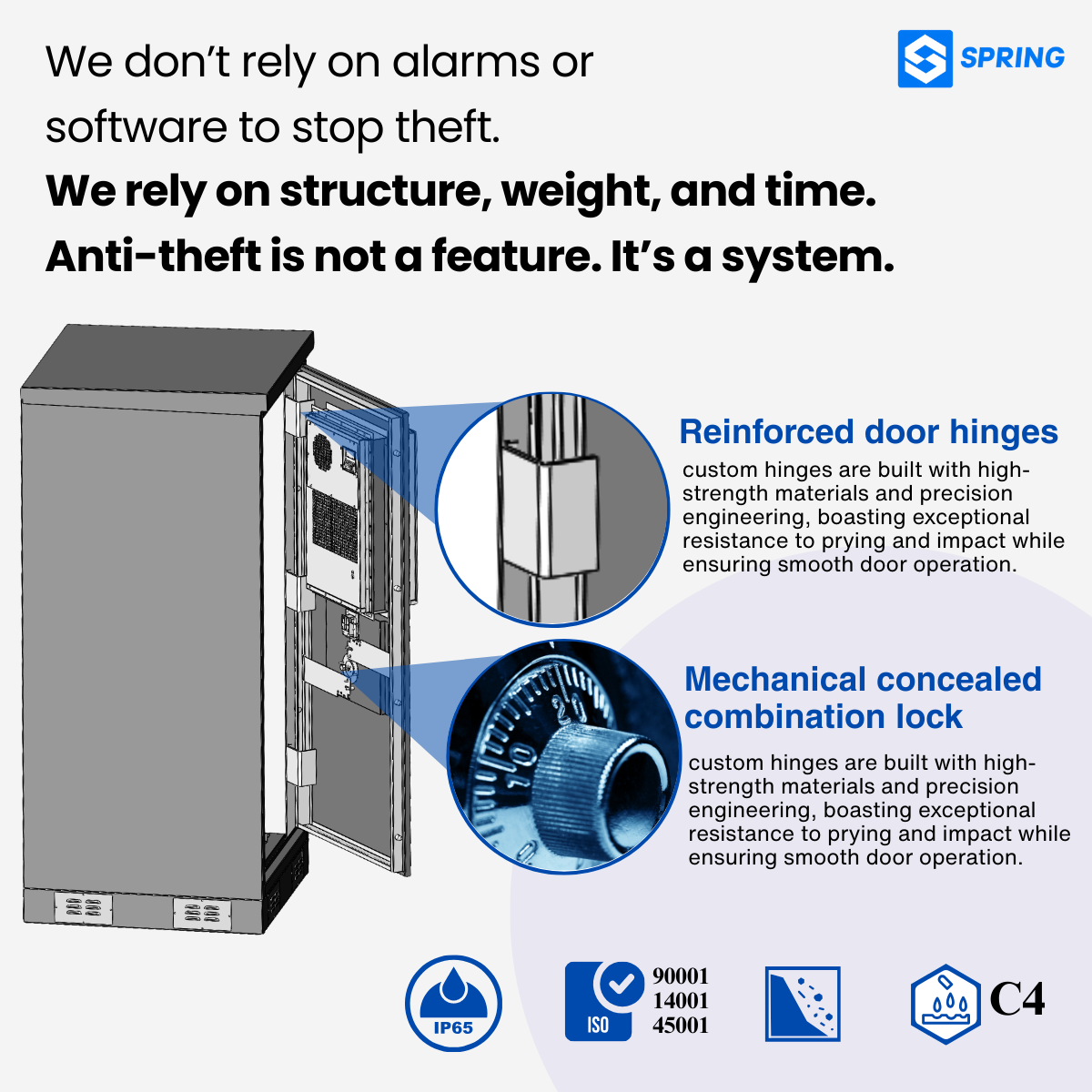
Anti-theft is not a feature. It is a system. A good anti theft cabinet should include a structural defense system engineered against forced entry and environmental exposure.
Key structural advantages:
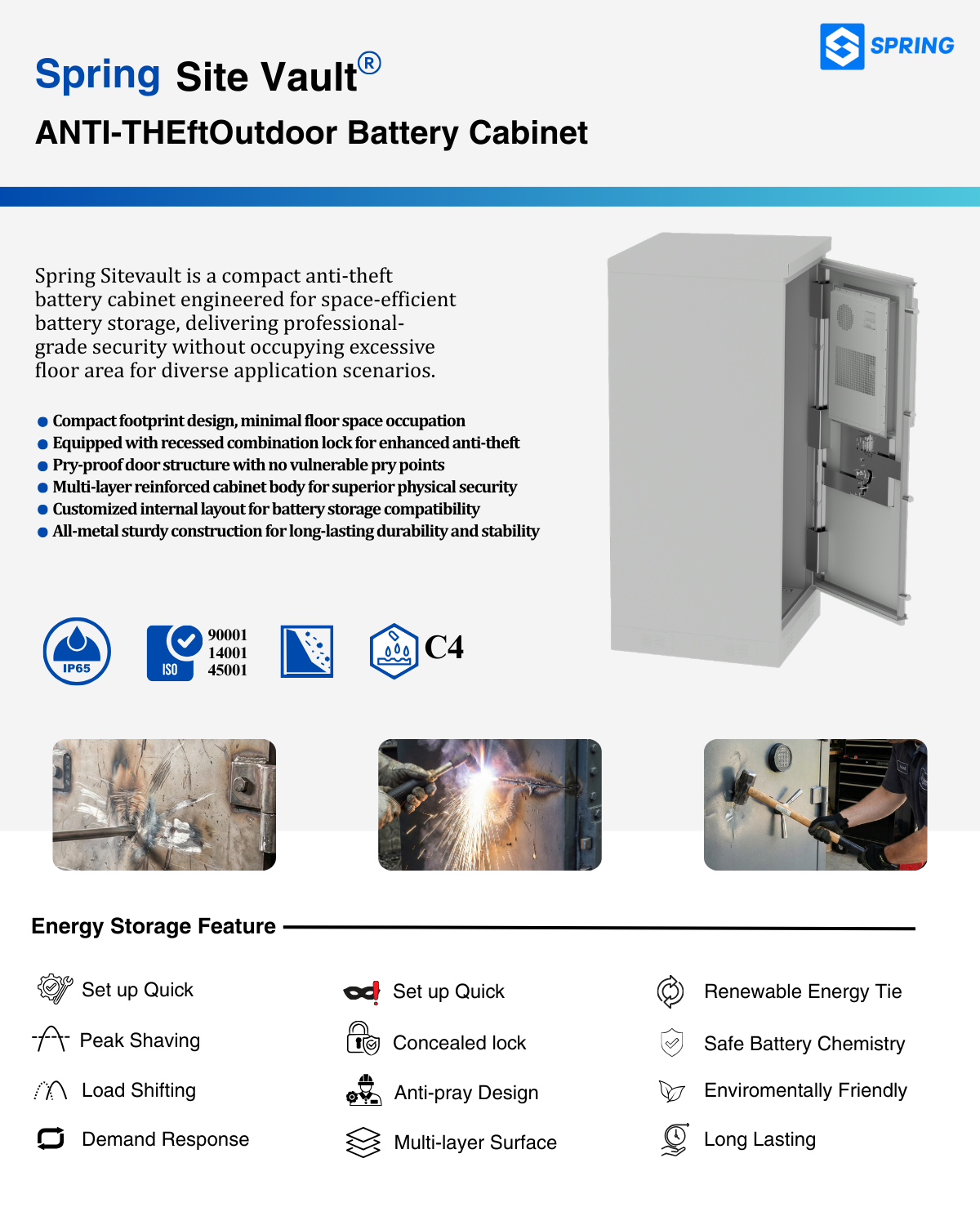
- Multi-layer reinforced cabinet body for extended forced-entry resistance
• Pry-point-free exterior surface design
• Reinforced anti-cut door and frame structure
• Impact-resistant construction against violent blunt-force attacks
• Concealed mechanical locking system (no exposed cylinder)
• Heavy-duty reinforced hinges
Certified for Harsh Environments:
- NEMA 4
• IP65
• C4 corrosion resistance
Combining physical security and operational durability, this ensures protection not only against forced entry, but also against harsh environmental exposure
Related Products